Something I’ve learned while building automation is that writing tests isn’t the difficult part. Keeping them reliable as the application evolves is. This project wasn’t built to maximize the number of test cases. It was built to answer a more important question:
How do you create automation that teams can actually trust before every release?

Overview
This framework validates the complete user experience of a modern Kanban task management application using Playwright and TypeScript. Rather than focusing on isolated user journeys, the project validates the application across multiple dimensions simultaneously:
Desktop, tablet, and mobile layouts Light and dark themes Board management Task lifecycle Responsive navigation Drag and drop Persistence Edge cases Known product defects
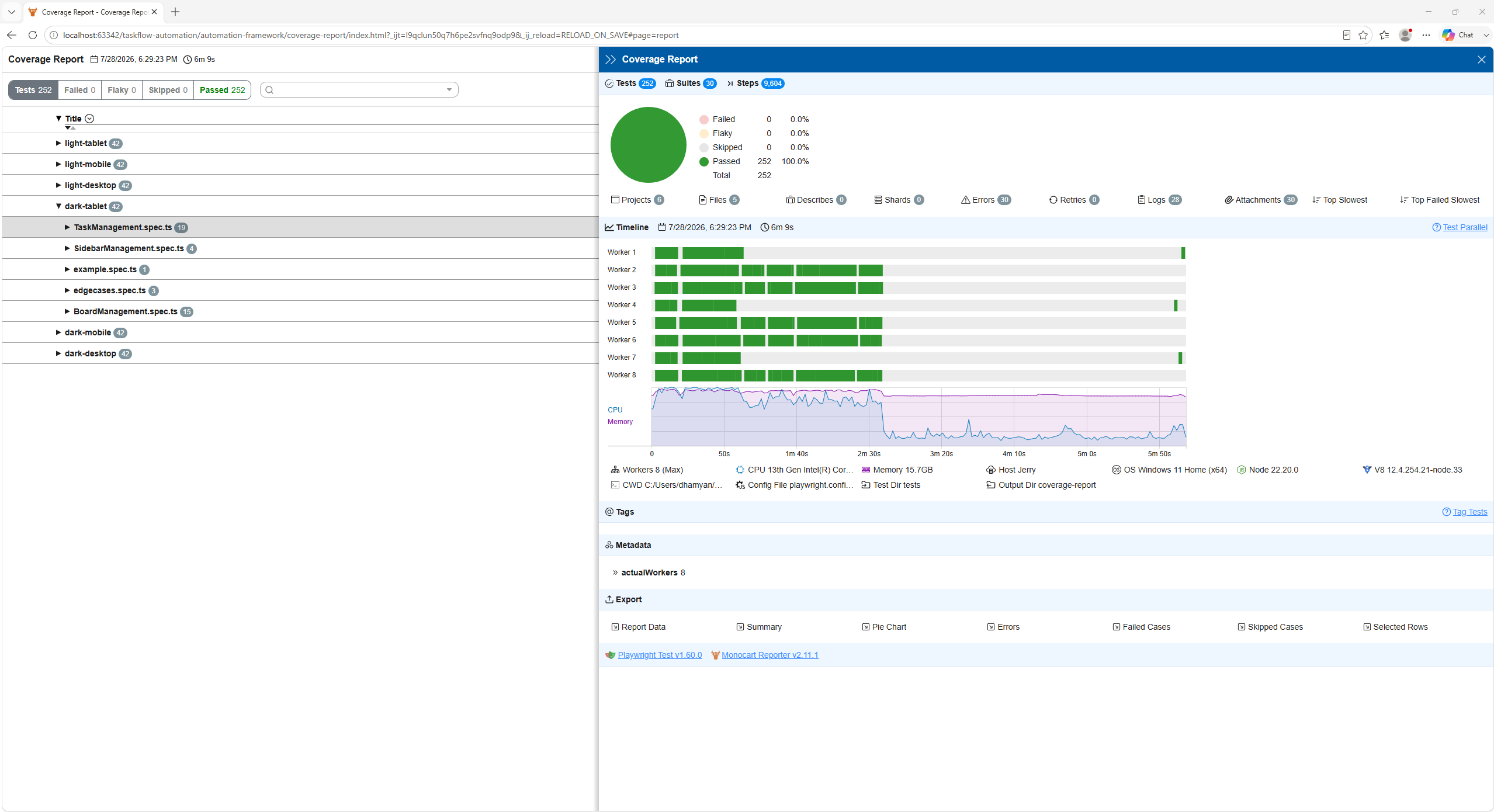
In total, every execution expands into 252 automated UI tests running across six independent Playwright projects.
The Challenge
Modern interfaces rarely behave the same across every device. A button might move. A mobile menu replaces a desktop sidebar. Dark mode introduces different rendering. Responsive layouts change interactions entirely. Many automation suites quietly ignore those differences. I wanted this framework to embrace them instead.
Engineering Decisions
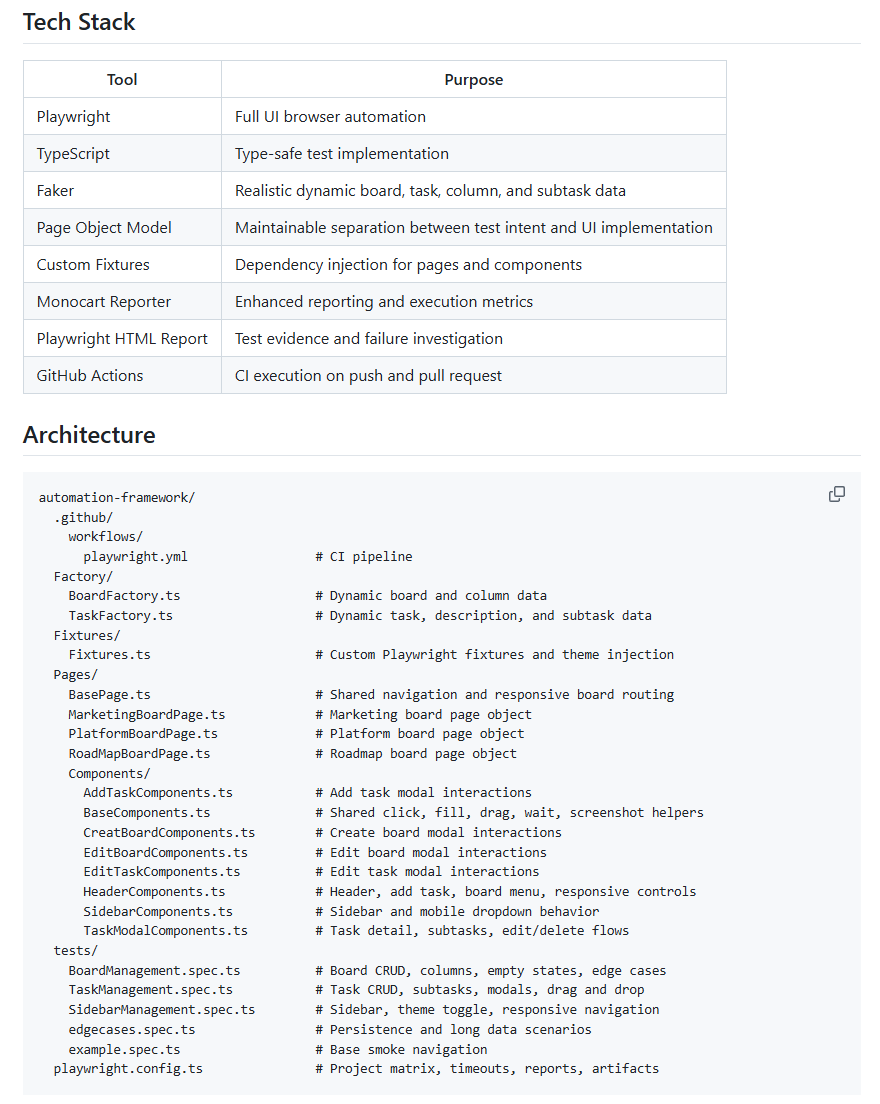
Several architectural decisions shaped the project. Instead of storing every selector directly inside test files, the framework separates responsibilities through Page Objects and Component Objects. Factories generate realistic dynamic data. Custom Playwright fixtures inject themes before the application loads. Responsive navigation is abstracted so tests don’t need separate desktop and mobile implementations. The goal wasn’t simply cleaner code. It was making future maintenance dramatically easier.
Evidence Matters
One thing I care deeply about is evidence. Passing tests are useful. Understanding failures is even more valuable. The framework automatically generates:
Playwright HTML Reports Monocart Reports Screenshots Videos Traces Custom visual evidence
So when something fails, developers immediately know what happened instead of trying to reproduce it manually.
Testing Isn’t Only About Passing
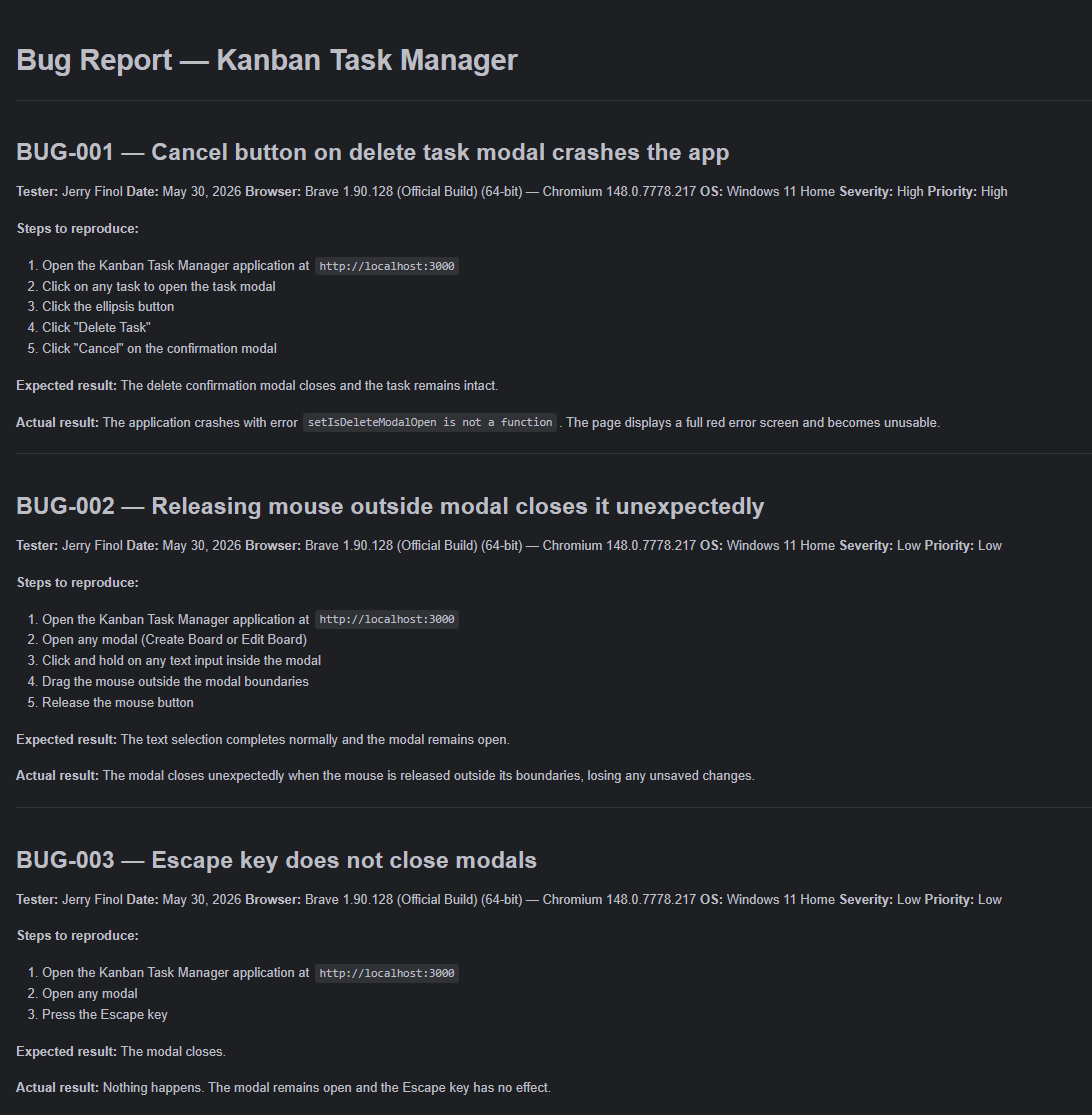
One feature I’m particularly proud of is how the framework handles known product bugs. Instead of deleting failing tests or commenting them out, known defects remain documented as expected-risk scenarios. This means the automation reflects the actual state of the product rather than pretending everything is perfect. Once a bug is fixed, the corresponding test simply becomes part of the normal regression suite. For me, automation shouldn’t hide reality. It should document it.
What I Learned
This project completely changed the way I think about automation. Automation isn’t writing scripts. It’s software engineering. Every architectural decision affects future maintenance. Every duplicated selector becomes technical debt. Every flaky test reduces confidence. Building reliable automation requires thinking months ahead, not just until the next successful execution.
Final Reflection
One sentence kept coming back while I built this framework. Reliable automation isn’t measured by how many tests you write. It’s measured by how confidently a team can deploy because those tests exist. That’s ultimately what this project represents. Not a collection of Playwright scripts. A maintainable quality engineering asset.
Repository
Explore the complete framework, architecture, and implementation on GitHub.