Something I enjoy just as much as testing products is building the tools that make testing reliable.
This framework was designed as if it were going into production—not simply to automate test cases, but to demonstrate maintainability, scalability, and engineering decisions that teams can build upon.

Overview
Designed to simulate the level of automation expected in a production environment, this framework executes:
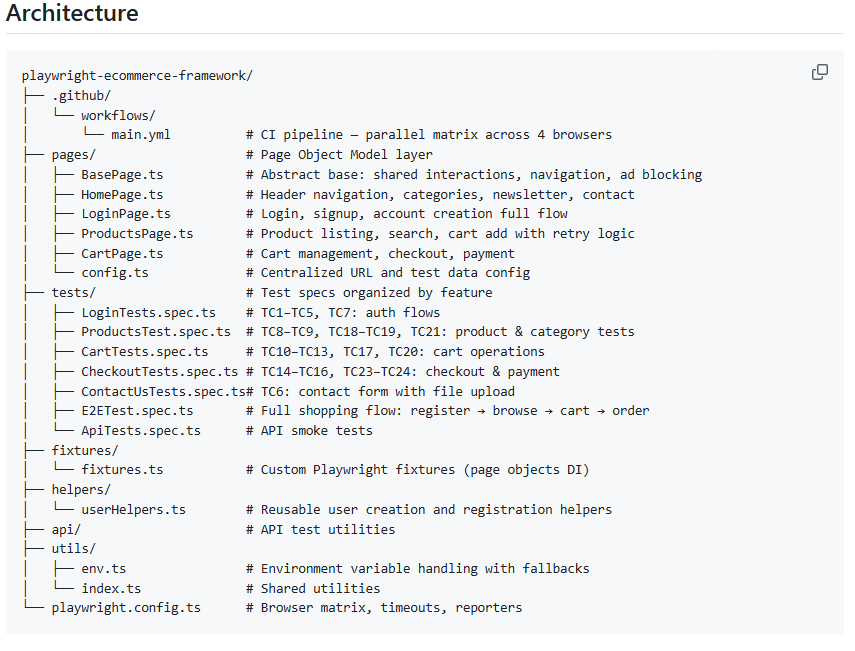
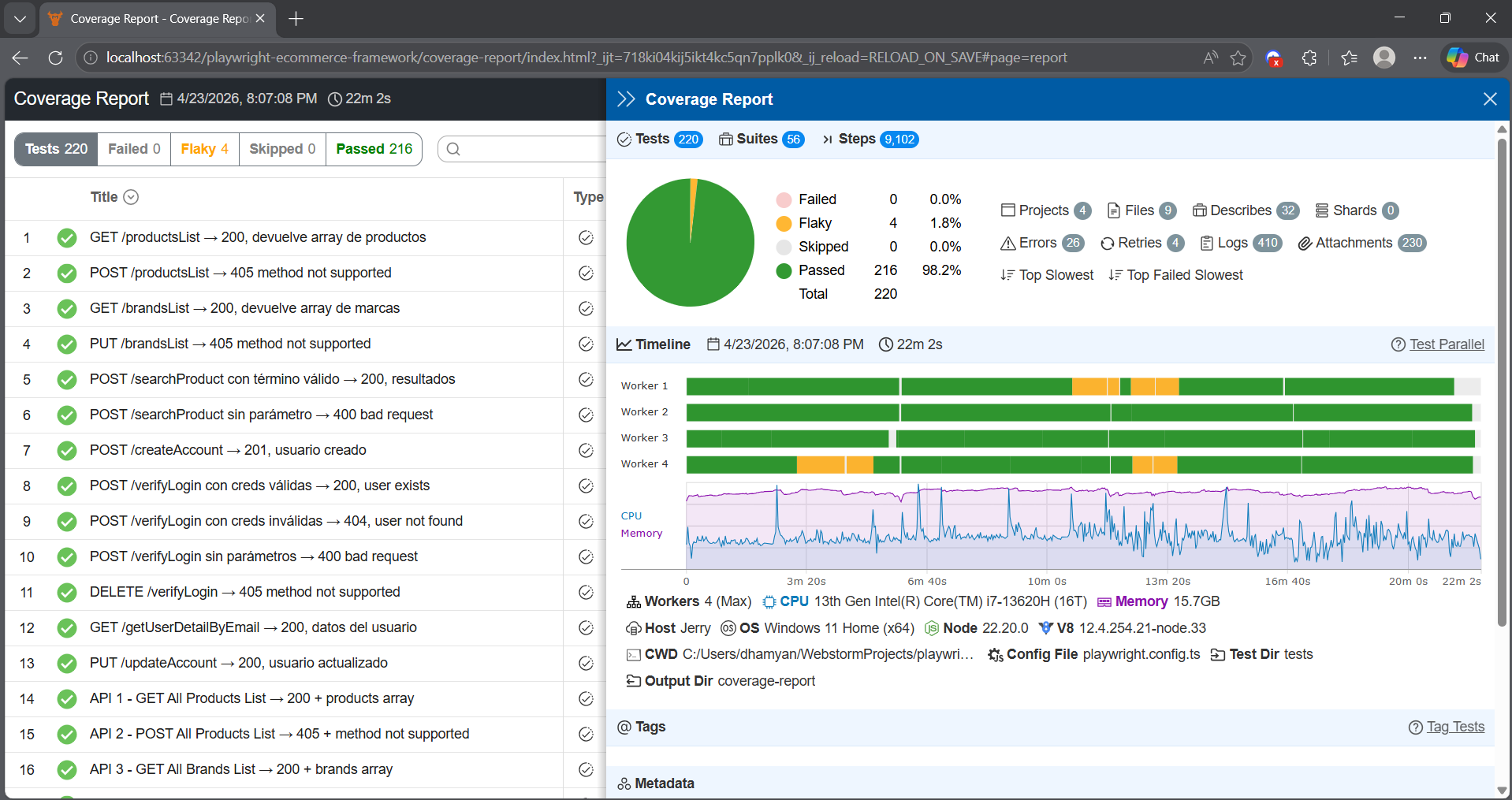
220 automated test executions
26 UI test cases
14 API tests
Parallel execution across four browsers
Continuous Integration with GitHub Actions
Every component was built with maintainability, scalability, and engineering best practices in mind.
The Challenge
Modern web applications are rarely predictable. AJAX requests fail.
Network conditions change. Browsers behave differently. Race conditions appear. Writing automated tests is easy. Building tests that remain reliable over time is much harder.
This project focuses on solving those engineering challenges rather than hiding them behind longer timeouts.
The Solution
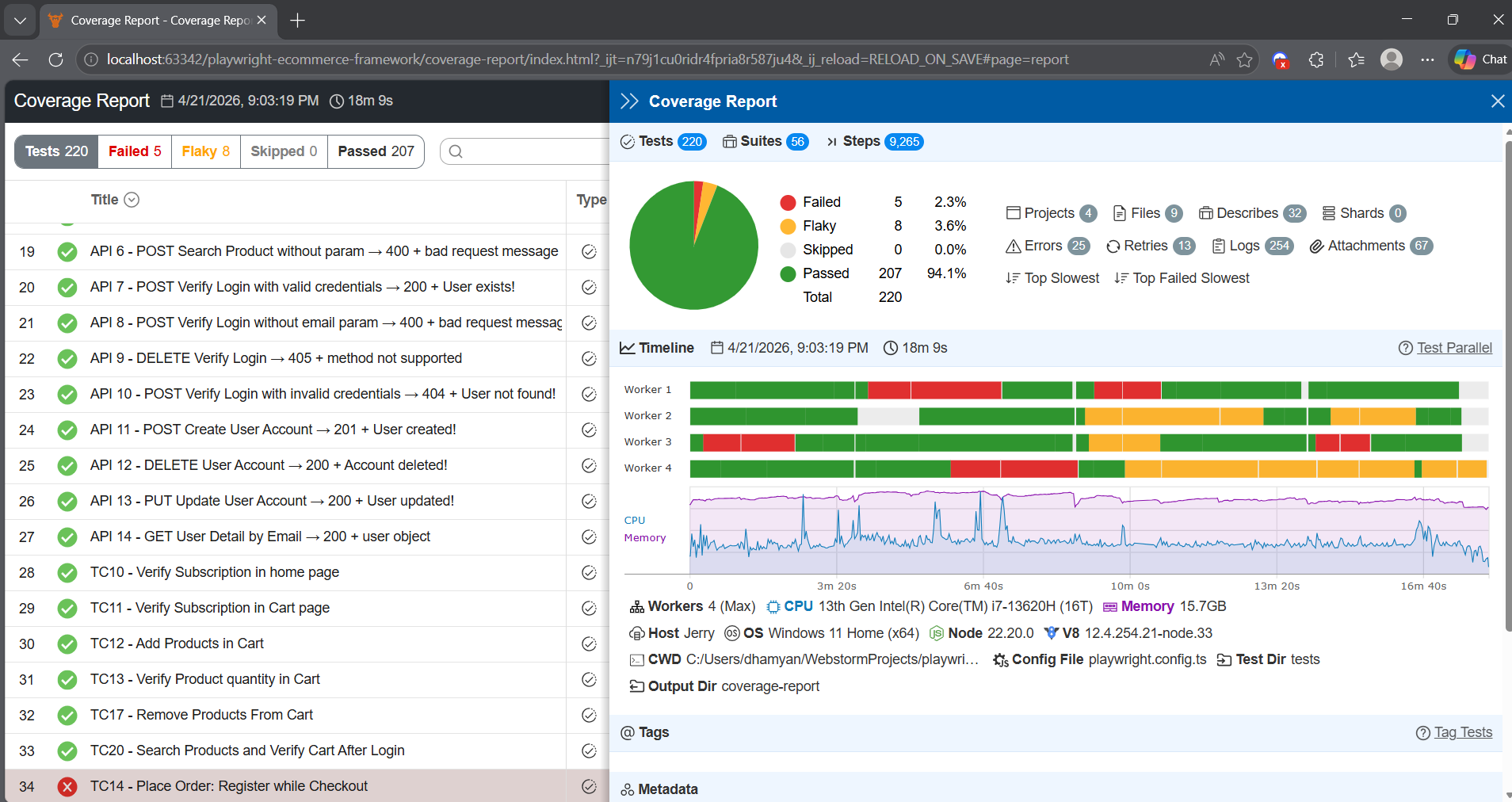
The framework follows the Page Object Model architecture to separate business logic from UI interactions, making tests easier to maintain as applications evolve.
It also includes:
- Cross-browser execution
- API testing
- Environment configuration
- Retry strategies
- Custom Playwright fixtures
- GitHub Actions CI/CD
- Rich HTML reporting
Every architectural decision was made with long-term maintainability in mind.
What I Learned
Automation isn’t about writing scripts.
It’s about understanding why software behaves the way it does.
Reliable automation requires curiosity, critical thinking, and a willingness to investigate problems instead of working around them.
This project reinforced something I strongly believe:
Good automation starts with understanding.
Repository
Explore the complete source code, architecture, and implementation on GitHub.